Mother Nature is very forgiving. No matter how much humanity abuses her, she still provides for us. Thanksgiving wouldn’t be very tasty if not for her pollinators supplying everything from the veggies that complement the turkey and dressing to the seasonings that make all the dishes delicious.
We’re not alone in being blessed by nature’s bounty. We share this planet with other creatures that instinctively appreciate the flowers, shrubs, and trees that supply the food and shelter they need to thrive. Of course, they don’t express their gratitude as we do. Instead, they show their thanks by playing their role in caring for and propagating the vegetation, thereby keeping the process in motion. Isn’t it amazing how plants and insects work harmoniously toward a common goal?
When the natural balance between native flora and fauna is allowed to continue as it has for many millennia, all living things benefit.
Winter could be a challenging time for wildlife if not for nature’s way of planning ahead. For hibernating insects, a diverse selection of plants blooms every autumn to provide a smorgasbord of rich, tasty, nutritious pollen and nectar. Native bees, wasps, butterflies, moths, beetles, and even ants work tirelessly, gathering pollen and seeds to fatten themselves up and/or store to feed their offspring during the cold months ahead.
We’re not alone in being blessed by nature’s bounty. We share this planet with other creatures that instinctively appreciate the flowers, shrubs, and trees that supply the food and shelter they need to thrive. Of course, they don’t express their gratitude as we do. Instead, they show their thanks by playing their role in caring for and propagating the vegetation, thereby keeping the process in motion. Isn’t it amazing how plants and insects work harmoniously toward a common goal?
When the natural balance between native flora and fauna is allowed to continue as it has for many millennia, all living things benefit.
Winter could be a challenging time for wildlife if not for nature’s way of planning ahead. For hibernating insects, a diverse selection of plants blooms every autumn to provide a smorgasbord of rich, tasty, nutritious pollen and nectar. Native bees, wasps, butterflies, moths, beetles, and even ants work tirelessly, gathering pollen and seeds to fatten themselves up and/or store to feed their offspring during the cold months ahead.
I’m fascinated by all the activity around the yellow, white, and blue blossoms of goldenrods, asters, sunflowers, blue mistflowers, bearded beggarticks, and bitter sneezeweed. They all know what to do, and even though it’s rush-hour, there are no bottlenecks, arguments, or collisions.
For the birds and animals that stay active during the winter, braving the bitter temps and freezing precipitation, nature supports them as well. At first glance, the landscape may appear like all the vegetation has died off. But looking closely, you can see the berries, fruits, seeds, and nuts Mother Nature left behind to feed the hungry critters during the lean months.
Here are a few woodland goodies I’ve found while exploring the countryside:
For the birds and animals that stay active during the winter, braving the bitter temps and freezing precipitation, nature supports them as well. At first glance, the landscape may appear like all the vegetation has died off. But looking closely, you can see the berries, fruits, seeds, and nuts Mother Nature left behind to feed the hungry critters during the lean months.
Here are a few woodland goodies I’ve found while exploring the countryside:
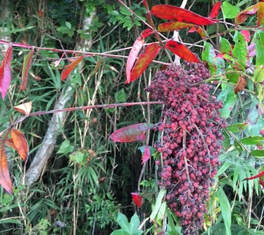
Winged Sumac
Sumac serves primarily as a winter emergency food for wildlife. Ring-necked pheasant, bobwhite quail, wild turkey, and about 300 species of songbirds include sumac fruit in their diet. It is also known to be important in the winter diets of ruffed grouse and sharp-tailed grouse. Fox, squirrels, and cottontail rabbits eat the sumac bark. White-tail deer like the fruit and stems.
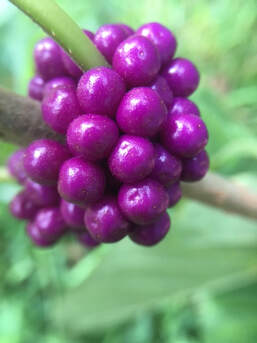
American Beautyberry
The fruit is high in moisture content and is an important food source for more than forty species of songbirds, including the American Robin, Brown Thrasher, Purple Finch, and Eastern Towhee. The drupes or clusters are eaten by armadillos, foxes, opossums, raccoons, and squirrels. White-tailed deer consume the fruit in the fall after leaf drop.
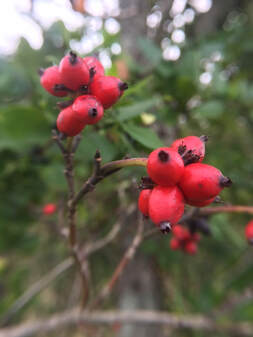
Dogwood
Chemical analyses of dogwood berries have revealed that the seeds are high in calcium and fat, making them a valuable food for both migrating birds and resident wildlife alike. Wildlife food habit studies have shown that at least 75 animal species consume dogwood berries.
Many birds, including songbirds, forest edge species, and upland game birds (wild turkey) consume the seeds. The eastern chipmunk, white-footed mouse, gray fox, gray squirrel, black bear, beaver, white-tailed deer, and skunk readily consume flowering dogwood seeds as well.
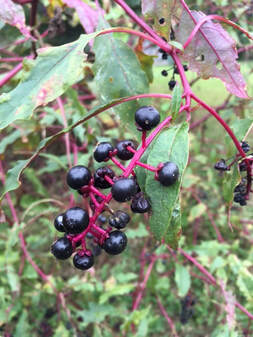
Pokeweed
Pokeweed berries are eaten by various songbirds that hang out in thickets and woodland areas, as well as mammals, including raccoons, opossums, and gray foxes. ⚠ Please note that the berries are poisonous to humans.
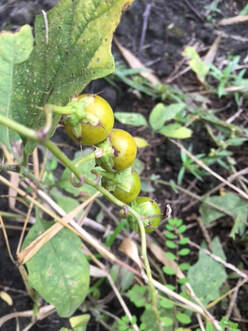
Carolina Horse nettle
⚠ Humans and most animals should not eat horse nettle, as the entire plant is poisonous. For wildlife, the mature yellow fruits may be eaten by quail, wild turkeys, and some small mammals.
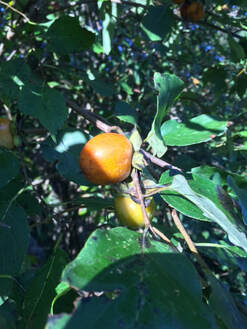
Common Persimmon
Persimmon fruits are high in vitamin C and are eaten by more than 28 species of wildlife, including opossums, rodents, raccoons, foxes, black bears, and skunks. The birds that dine on the fruit include wild turkeys, yellow-rumped warblers, cedar waxwings, catbirds, robins, pileated woodpeckers, and mockingbirds.
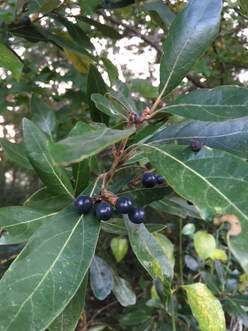
Redbay Persea
Redbay is reported to be a significant food source for wildlife and is browsed heavily in fall and winter. In order of volumetric importance, redbay fruits were in 15th place in a list of 63 food items. (USDA fact sheet)
Many birds, including bluebirds, mockingbirds, brown thrashers, fish crows, robins, quail, and turkeys consume redbay fruit. Rodents also eat the fruit, while deer and black bears feed on the fruit and leaves. The redbay also provides a home for squirrels.
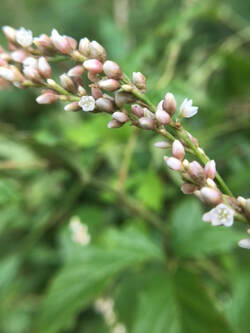
Dotted Smartweed
This wetland plant is essential to many kinds of native wildlife and is an excellent food for waterfowl. Twenty species of ducks, geese, bobwhites, mourning doves, ring-necked pheasants, and four species of rails eat the seeds. Dense stands supply cover for young waterfowl, marsh birds, and wintering pheasants. Thirty nongame birds, mice, muskrats, raccoons, fox squirrels, and dozens of other species of mammals also eat the seeds.
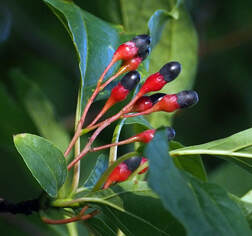
Sassafras
Many birds, including bobwhite, woodpeckers, mockingbirds and catbirds, flycatchers, and wild turkey relish sassafras berries. Deer and porcupines feed on the tree’s twigs and leaves, and rabbits nibble on the bark in winter. Black bears, beavers, rabbits, and squirrels eat the fruit, bark, and wood.
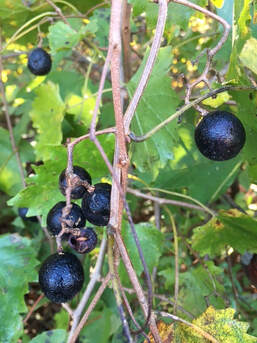
Muscadines
White-tailed deer browse the grapes and the vines themselves. Other mammals include black bears, raccoons, coyotes, red and gray foxes, opossums, cottontails, gray and fox squirrels, and striped skunks.
Wild turkeys, quail, wood ducks, and more than three dozen species of birds such as mourning dove, red-headed and red-bellied woodpeckers, great crested flycatcher, tufted titmouse, northern mockingbird, brown thrasher, gray catbird, eastern bluebird, Baltimore and orchard orioles, wood, hermit and gray-cheeked thrushes, yellow-breasted chat, summer and scarlet tanagers, eastern towhees eat the fruit. Muscadine vines also provide birds with nesting sites and nesting material, as well as cover for animals trying to escape predators and severe weather.
All creatures, whether they have two, four, six, eight, or no legs, have much to be grateful for. Aren’t we lucky to have such a loving mother?
Have a wonderful Thanksgiving!
White-tailed deer browse the grapes and the vines themselves. Other mammals include black bears, raccoons, coyotes, red and gray foxes, opossums, cottontails, gray and fox squirrels, and striped skunks.
Wild turkeys, quail, wood ducks, and more than three dozen species of birds such as mourning dove, red-headed and red-bellied woodpeckers, great crested flycatcher, tufted titmouse, northern mockingbird, brown thrasher, gray catbird, eastern bluebird, Baltimore and orchard orioles, wood, hermit and gray-cheeked thrushes, yellow-breasted chat, summer and scarlet tanagers, eastern towhees eat the fruit. Muscadine vines also provide birds with nesting sites and nesting material, as well as cover for animals trying to escape predators and severe weather.
All creatures, whether they have two, four, six, eight, or no legs, have much to be grateful for. Aren’t we lucky to have such a loving mother?
Have a wonderful Thanksgiving!
 RSS Feed