
No matter how often you hear someone say global warming does not exist, the facts, proof, and experts prove that it is genuine and not something we can put off worrying about until tomorrow. The World Wildlife Fund states that the average global temperature has warmed by over one degree Celsius since pre-industrial times. Moreover, some areas with crucial ecological importance – like around the poles – are warming at two or three times the global average.
The leading causes of climate change are:
What Is A Carbon Footprint?
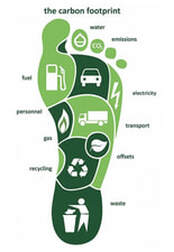
A person’s carbon footprint measures the greenhouse gases (carbon dioxide, methane, nitrous oxide, and fluorinated gases) produced from their daily activities. As an individual or a family, we can make choices that will lessen our impact on the environment. For example, by reconsidering the food we buy, the gas and electricity powering our homes, and the fuel burned during our travels, we can reduce the amount of carbon emitted during our daily activities.
Your carbon footprint also considers other aspects of our purchases and actions—for instance, food. According to the UN, one-third of greenhouse gas emissions come from food production systems. Does your family consume a lot of meat? That increases your carbon footprint due to the methane released in the production of meat and dairy foods. Do you do a lot of shopping? The clothing industry is motivated by the mass production of goods. This uses large amounts of energy and produces a lot of waste, increasing the pollution pumped into the air.
The average carbon footprint for a person in the US is 16 tons per year. According to the United Nations, to avoid a two-degree Celsius rise in global temperatures above pre-industrial levels, that annual average must come down to two tons per person by 2050. That’s a significant challenge.
The first step in meeting that challenge is determining your carbon footprint. A carbon footprint calculator will ask:
Once you do the calculations and know your carbon footprint, you’ll see where you can play an active role in combating global warming and make a positive difference in this world.
The leading causes of climate change are:
- Fossil fuels – the increasing use of coal, oil, and gas for transportation, generating electricity, and powering industry pump tons of carbon dioxide into the air.
- Deforestation –large swaths of woodlands and rainforests are being destroyed, removing the trees that cool the air, absorb carbon dioxide, and produce oxygen.
- Farming/agriculture – removes native habitat and replaces it with monocrops sprayed with pesticides and cattle emitting large quantities of greenhouse gases like methane and nitrous oxide.
- Waste/ Landfills – high levels of greenhouse gases are generated by decomposing waste. In 2014, US landfills released an estimated 148 million metric tons of CO2 into the atmosphere.
What Is A Carbon Footprint?
A person’s carbon footprint measures the greenhouse gases (carbon dioxide, methane, nitrous oxide, and fluorinated gases) produced from their daily activities. As an individual or a family, we can make choices that will lessen our impact on the environment. For example, by reconsidering the food we buy, the gas and electricity powering our homes, and the fuel burned during our travels, we can reduce the amount of carbon emitted during our daily activities.
Your carbon footprint also considers other aspects of our purchases and actions—for instance, food. According to the UN, one-third of greenhouse gas emissions come from food production systems. Does your family consume a lot of meat? That increases your carbon footprint due to the methane released in the production of meat and dairy foods. Do you do a lot of shopping? The clothing industry is motivated by the mass production of goods. This uses large amounts of energy and produces a lot of waste, increasing the pollution pumped into the air.
The average carbon footprint for a person in the US is 16 tons per year. According to the United Nations, to avoid a two-degree Celsius rise in global temperatures above pre-industrial levels, that annual average must come down to two tons per person by 2050. That’s a significant challenge.
The first step in meeting that challenge is determining your carbon footprint. A carbon footprint calculator will ask:
- How many miles do you travel by car, airplane, bus, and train?
- About the energy used in your home.
- How much do you spend shopping?
- The types of food you eat.
Once you do the calculations and know your carbon footprint, you’ll see where you can play an active role in combating global warming and make a positive difference in this world.
How To Reduce Your Carbon Footprint
Knowing your carbon footprint opens your eyes and mind to the areas where changes can be made.
Driving. Most of us have never considered how much and how often we travel contributes to global warming. According to the EPA, an average car produces approximately 4.6 metric tons of carbon dioxide annually. One of the most effective ways to reduce those emissions is to plan our outings to complete all our errands in one trip. You could also carpool with a friend for some of the shopping trips when possible. For some excursions, public transportation may be feasible. When your stops are close together, park your car in a central location and walk instead of driving. Consider this – not only would driving fewer miles benefit our planet but think of the money you’d save on gas, tires, and car maintenance.
Flying. Airplanes are the absolute worst at converting fossil fuels into tons of CO2. If you fly a lot, planning your flights non-stop with only one fuel-guzzling takeoff and landing and one less long round-trip flight would shrink your carbon footprint significantly. You might consider taking a train instead.
Home. Ensure your home is as energy-efficient as possible by using energy-efficient appliances and light bulbs and turning off and unplugging electronics when not in use. If possible, switch to an electric provider that uses low-carbon solar, wind, or water sources for generating power. Turning the heat down one degree Celsius will save up to 661 pounds of carbon dioxide emissions per year and five to ten percent off your energy bill.
Food. The meat and dairy industries are some of the top contributors to global greenhouse gas emissions, plus animal agriculture is a leading cause of deforestation. So, eating more plant-based food can improve your carbon footprint.
Clothing. Think twice before you buy that new shirt. Do you really want it, or will it be worn once or twice and then relegated to the back of your closet? What’s going to happen to the shirt? Will it be donated to a second-hand shop or tossed in the garbage? If it’s thrown away, the shirt will end up in a landfill, adding to the gases emitted from the decomposing waste. Instead, you can help reduce your environmental impact by not buying clothes you don’t need. And remember, organic materials such as cotton, linen, hemp, and bamboo are much better for the environment than synthetic.
Reduce. Reuse. Recycle. Globally, we dump over 2.12 billion tons of waste per year. According to Our World In Data, at least 6 percent of global greenhouse gas emissions come from food loss and waste. The more we buy, the more we throw away, so think carefully about your purchases. Choose items that will last instead of constantly needing to replace them, and when it is time to get rid of them – recycle.
So take the first step, use a carbon footprint calculator, and go from there. There are solutions to the climate crisis, but it will take everyone doing their part. Are you up to the challenge?
Knowing your carbon footprint opens your eyes and mind to the areas where changes can be made.
Driving. Most of us have never considered how much and how often we travel contributes to global warming. According to the EPA, an average car produces approximately 4.6 metric tons of carbon dioxide annually. One of the most effective ways to reduce those emissions is to plan our outings to complete all our errands in one trip. You could also carpool with a friend for some of the shopping trips when possible. For some excursions, public transportation may be feasible. When your stops are close together, park your car in a central location and walk instead of driving. Consider this – not only would driving fewer miles benefit our planet but think of the money you’d save on gas, tires, and car maintenance.
Flying. Airplanes are the absolute worst at converting fossil fuels into tons of CO2. If you fly a lot, planning your flights non-stop with only one fuel-guzzling takeoff and landing and one less long round-trip flight would shrink your carbon footprint significantly. You might consider taking a train instead.
Home. Ensure your home is as energy-efficient as possible by using energy-efficient appliances and light bulbs and turning off and unplugging electronics when not in use. If possible, switch to an electric provider that uses low-carbon solar, wind, or water sources for generating power. Turning the heat down one degree Celsius will save up to 661 pounds of carbon dioxide emissions per year and five to ten percent off your energy bill.
Food. The meat and dairy industries are some of the top contributors to global greenhouse gas emissions, plus animal agriculture is a leading cause of deforestation. So, eating more plant-based food can improve your carbon footprint.
Clothing. Think twice before you buy that new shirt. Do you really want it, or will it be worn once or twice and then relegated to the back of your closet? What’s going to happen to the shirt? Will it be donated to a second-hand shop or tossed in the garbage? If it’s thrown away, the shirt will end up in a landfill, adding to the gases emitted from the decomposing waste. Instead, you can help reduce your environmental impact by not buying clothes you don’t need. And remember, organic materials such as cotton, linen, hemp, and bamboo are much better for the environment than synthetic.
Reduce. Reuse. Recycle. Globally, we dump over 2.12 billion tons of waste per year. According to Our World In Data, at least 6 percent of global greenhouse gas emissions come from food loss and waste. The more we buy, the more we throw away, so think carefully about your purchases. Choose items that will last instead of constantly needing to replace them, and when it is time to get rid of them – recycle.
So take the first step, use a carbon footprint calculator, and go from there. There are solutions to the climate crisis, but it will take everyone doing their part. Are you up to the challenge?
 RSS Feed