Sweet & Sassy Scribblers
​
  • Genres
  • Fiction
    • Books for Children
    • Fantasy
    • Thrillers
    • Mysteries
    • Women's Fiction
    • Science Fiction
  • Nonfiction
    • Well-being
    • Spiritual Psychology
    • Poems, Essays, Etc.
  • Heart Song Ghostwriting
  • MindSlap! - Spiritual Psychology
  • Let's Get Our Hands Dirty
  • The Scribblers

Following the Latest Trend: Good Idea or Not?

4/25/2023

0 Comments

 
Picture
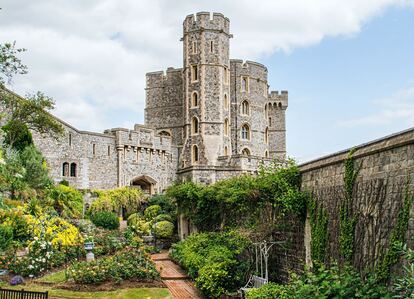
Photo by E Mens on Unsplash
Picture

​The Weed-free Lawn Trend
Our modern society has conditioned us to maintain a well-manicured, weed-free lawn to be held in high regard by our neighbors, friends, and even city officials. Some neighborhoods have homeowner associations that will fine you for allowing your lawn to grow taller than a certain height or for having plants other than grass in your yard.

We haven’t always felt that way. Did you know that in the 1500s, well-to-do English landowners took pride in their rainbow-colored lawns of wildflowers where grass was considered the unwelcomed weed? The arduous task fell upon the shoulders of young lads who were hired to keep the upper-class grounds grass-free.

It wasn’t until the 19th century that perceptions changed. The Garden Clubs of America, the U.S. Golf Association, and the U.S. Department of Agriculture launched a campaign to convince Americans they needed to carpet their yards in a sea of green. With the advent of lawnmowers, everyone could have immaculate lawns like the rich and famous.

It worked.

Lawns now cover roughly 40.5 million acres or two percent of the land in the U.S., making them the largest crop cultivated in this country. But do they serve any environmental purpose? Unfortunately, no. Maintaining the perfect lawn requires constant attention, uses a massive amount of water, and provides little or no beneficial habitat to any living creatures with whom we share this earth.  

Mindsets are slowly changing now. The trend is gradually transitioning from maintaining a manicured lawn to allowing it to be more natural. Homeowners are experimenting with landscaping their yards with various plants, trees, and shrubs that offer a diverse selection of food and shelter for beneficial insects and other critters. They are also discovering that replacing the boring weed-free green monoculture benefits them as well by saving time and money – as in no more raking, mowing, fertilizing, weeding, watering, or using those terrible, awful pesticides.

It’s wonderful that people are learning not to use pesticides and artificial fertilizers and are being encouraged to provide native plants for pollinators. But what about some of the other trends? Are they beneficial?
 
No Mow May Trend
No Mow May began in Britain and made its way to the U.S. by way of Appleton, WI, in 2019. Since then, the idea of not mowing your lawn for a specific period of time at the beginning of spring has spread like wildfire across America.

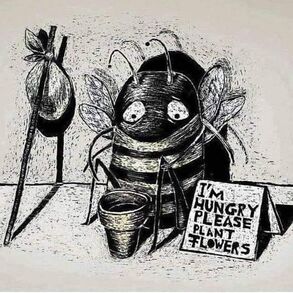
The theory behind No Mow May states that by not cutting grass, native flowers tucked away in the lawn are allowed to mature and bloom. These early blooming small flowers provide nectar and pollen for hungry insects, namely bees, emerging from their winter shelters.

Of course, letting the grass grow in May doesn’t work everywhere. There are many temperate zones across the country, meaning spring doesn’t necessarily arrive in May. It may come earlier or later. So this method has to be adapted to the specific area.
 
It sounds like a nice thing to do for the bugs, but does it really work?
In most cases, not really.

No Mow May is more effective in metropolitan areas than in rural. In some cities, very little native flora exists. Therefore, any bees looking for nourishment must rely on lawn weeds which generally consist of clover and dandelions. That’s fine in Britain and Europe where these native plants offer the nutrients insects need. Here in the States, though, that’s not the case. Not all yard weeds, especially the non-native varieties, are beneficial for pollinators.

According to the Journal of Economic Entomology, a 1987 study found that honeybees fed only dandelion pollen demonstrated poor brood-rearing capabilities due to the dandelion’s inability to provide the necessary amino acids the honeybees need.

Plus, 
non-natives plants can and will spread to natural areas, out-competing native species. Added to that, a lawn previously treated with herbicides will only grow tall grass and introduced weeds, and will retain chemicals that can be harmful or fatal to bees and other insects.

Overall, in the U.S, the No Mow May trend means well but is not a 
realistic answer to feeding hungry insects in early spring. It may make folks feel good about helping the bees. However, one month of not cutting grass ain’t going to hack it! Bugs need food and shelter the rest of the year too.

On the Flipside...
T
hat leads us to another trend. Instead of only one month, how about not cutting grass as often? 

Proponents of the modified No Mow May concept refer to studies that indicate less cutting equals more flowering plants, which attracts not only a larger number of bees, butterflies, beetles and other pollinators, but also more species of these invertebrates as well. For example, in Kentucky, 26 species of bees have been observed feeding on clover and dandelions. Another study in Massachusetts found that varying the frequency of mowing (weekly, bi-weekly, every three weeks) influenced bee abundance. Waiting three weeks between cutting doubled the number of flowers in the lawn and attracted up to 111 bee species.

I find those numbers encouraging, yet the same results will not be consistently repeated in all regions of the country. I also have to ask - are the 26 species of bees feeding on clover and dandelions getting the nutrients they need or is it more like junk food? 

The best thing for everyone to do is simple. Instead of depending on sporadic self-seeding flowers and weeds, plant early-blooming native flowers, trees, and shrubs that are guaranteed to give the indigenous bugs the nectar and pollen they need.

Heather Holm suggests these early blooming natives:
  • Red Maple – Acer rubrum
  • Pasque Flower – Anemone patens
  • Virginia Waterleaf – Hydrophyllum Virginian
  • Violet – Viola
  • Willow – Salix
  • Bloodroot – Sanguinaria Canadensis
  • Wild Plum – Prunus Americana
  • Golden Alexander – Zizia aurea
  • Wild Geranium – Geranium maculatum

The whole idea is to understand the relationship of all life on Earth and provide a wide variety of flora that will ensure the health of habitats and ecosystems. In other words - provide biodiversity. Maintaining nature's balance is paramount to supporting the dwindling populations of pollinators, native bees, birds, and more.

You can do this by:
  • reducing lawn size
  • removing invasives
  • providing nesting sites
  • eliminating the use of pesticides and fertilizers
  • supplementing your remaining lawn with native perennials, trees, and shrubs.
 
Don’t forget the rest of the growing season.
Try the 3-3-3 method each year to expand your native habitat. Increase diversity by adding three spring, three summer, and three autumn indigenous flowers, shrubs, or trees to your landscape so pollinators have a consistent food source.
​
Make this world a better place ----- one yard at a time.

0 Comments

Celebrate Mother Earth Day!

4/18/2023

0 Comments

 
Picture
Earth Day, Saturday, April 22, 2023
I love to walk. I love to go outside first thing in the morning before the hectic part of the day begins. I love to forget articles, queries, and deadlines for an hour and zero in on the sights and sounds around me.

Over the past few days, the wonderful scent of American wisteria has drawn me to take a closer look at a deserted house along my path. I feel so sorry for the sad, forlorn structure sitting there all alone with no one to love it. The azaleas and other plants remind me of what once was, and the wisteria acts as a calling card inviting people like myself to come into the yard and visit, if only for a few minutes.

While walking along one of the farm tracks winding through the woods, some kind of critter hurriedly vacates an overhanging tree limb causing the outer branches to dip down and bop me in the head. My mysterious onlooker, along with a mixed chorus of crunching leaves, snapping twigs, bird song, chirping frogs, and buzzing bugs, constantly remind me there's an awful lot of life sharing this corner of the planet with me.

I enjoy greeting the wild turkeys, deer, birds, rabbits, squirrels, and possums trying to sneak past me through the thick understory. Of course, I can't see them. However, I'm sure they notice me.
Passing the pond, I try to tiptoe noiselessly and catch a glimpse of the creature that splashes into the water before I can see what it is. It's a game we've been playing for months. He wins every day.

There's never a dull moment when you're hanging out with Mother Nature. The best part is you don't have to live out in the boonies to appreciate her beauty. Even in the middle of a large metropolis, you can find a natural area with trees and plants, birds and bugs busily doing their thing.

But we must face the cold, hard facts that not all is sunshine and lollipops. Climate change, pollution, deforestation, and habitat loss are major problems that must be dealt with NOW!

A place to start is in our woodlands
Our forests play a critical role in providing clean water to communities, preserving biodiversity, and sequestering and storing carbon. If protected, they can be used as "nature-based solutions" to stave off the worst effects of the climate crisis. Research shows that a significant portion of remaining mature forests are on federal lands. (From the study, "Mature and Old-Growth Forests Contribute to Large-Scale Conservation Targets in the Conterminous United States" https://www.frontiersin.org/articles/10.3389/ffgc.2022.979528/full)
 
"On Earth Day last year, President Biden started an important process to protect mature and old-growth forests on federal lands -- and he promised to deliver progress within a year," says Alex Craven, Sierra Club's Senior Campaign Representative for their Our Wild America Campaign.

President Biden recognized the invaluable significance of public lands as a nature-based solution to climate change. Experts agree. This decade is the make-or-break challenge to determine if we can protect Earth's remaining ecosystems. Craven predicts, "If we can preserve 30% of all lands and waters in the US by the year 2030, we can make meaningful strides to avoid the most damaging effects of climate change." 

Invest in Our Planet
The theme of Earth Day 2023 is Invest in Our Planet. One way we can do that is through reforestation.

According to the organization's Canopy Project, the world's forests have lost about 20% of their coverage since the early 1900s. The United Nations' Food and Agriculture Organization reports that about 7.3 million hectares (18 million acres) of forest are lost annually, and roughly half of Earth's tropical forests have already been cleared.

Planting trees is one of the biggest and cheapest ways to tackle the climate crisis. Trees take carbon dioxide out of the atmosphere, support vital animal habitats, and provide ecological services for humans by purifying the air and regulating local temperatures.

Responsible reforestation programs also benefit us by:
  • stabilizing the land from erosion or natural disasters, trees
  • improving water and soil health
  • promoting native and endemic fauna
  • providing economic development for nearby communities
Reforestation is one of the most important and accessible ways that people can contribute to solving the challenges of climate change.

That's only the beginning. EarthDay.org lists a variety of ways humanity can correct its wasteful, greedy, disrespectful habits and restore the biodiversity that's been lost.

Remember, creating habitat, reducing the use of plastics, education, advocacy, and getting others involved are not limited to the one day we recognize as Earth Day but need to be practiced 365 days a year. We have to consider ALL LIFE that shares our planet with us.

Earth Day events are scheduled across the world. You can find out what's happening in your region by checking the website.

If you can't participate in any official Earth Day activities, join me in creating our own Mother Earth Day celebration by getting together with friends and/or family and taking a walk. If you prefer, go by yourself. Just tune out the world and tune into nature. You'll be amazed at how relaxing that can be. Show your appreciation for nature's beautiful treasures by carrying a bag and picking up litter while you're out there. Make your Mother proud!!!
​
What will you do for Earth Day, April 22, 2023?


0 Comments

Must We Say Farewell?

4/11/2023

0 Comments

 
Picture
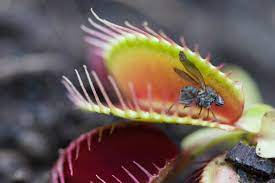
Have you ever seen a Venus flytrap? I had one of these plants when I was young and watched it for days waiting to witness it snap shut on a bug. I tried to place a dead fly in its "mouth." That didn't do any good. Next, I lured other small flying bugs toward the plant by placing food next to it. That failed too.

Being a typical kid, I eventually got bored and forgot about the plant. I'm ashamed to admit it, but my Venus flytrap died from lack of attention and care.

That memory file resurfaced after reading that this rare carnivorous plant, only found growing wild in a few remote areas of North and South Carolina, is in peril of disappearing altogether. The most heartbreaking news - the Venus flytrap is not alone.

The conservation organization, NatureServe, analyzed 50 years of data from its network of American and Canadian scientists and found that 40% of animals and 34% of plants in the United States are at risk of extinction, while 41% of ecosystems are facing collapse. Those numbers in such a short amount of time are staggering. They're downright scary!

Their Biodiversity in Nature report identifies unprotected land and where animals and plants face the most threats.

The authors of the report found that habitat degradation, invasive species, dams, and climate change are among the primary threats to biodiversity in the United States. The threats against plants, animals, and ecosystems are greatest in California, Texas, and the southeastern United States.

Among pollinators, bees are particularly threatened, with 37% of assessed species classified "at risk." I was surprised that native bees in the western U.S. are more threatened than bees in the east. Living in the east, I reckon my perceptions are biased after having fewer bugs, birds, and bats visiting our yard.

In spring, I've always enjoyed having curious bumblebees hover a few inches from my nose, checking me out. Last year, there were very few. During the summer, zero bumblebees visited my flowers after the farmers sprayed pesticides over their ever-expanding fields. It wasn't until the autumn wildflowers started blooming that they returned. I was so happy to see my buzzing friends again!

However, it's not only pollinators that are threatened. Various birds, amphibians, fish, and land animals are in danger as well. As far as plants go, cacti top the list, with almost half of the species vulnerable to going extinct. But, unfortunately, that's not all. Two hundred species of trees, 40+ types of grassland, various flowers, ferns, sedges, and other flora also make the list.
​
What's really frightening is when you realize the same destruction is happening worldwide. How many ecosystems have been lost? What about the animals that depended on the diverse vegetation in those ecosystems? What will it take for people to understand that the future of humanity depends on the health of our natural world?

The Intergovernmental Science-Policy Platform on Biodiversity and Ecosystem Services (IPBES) Assessment Report on Land Degradation and Restoration states that more than 75 % of Earth's land areas are substantially degraded. If this trend continues, more than 90 % of the Earth's land areas could become degraded by 2050, potentially exacerbating climate change and leading to mass migration, conflict, and major food security concerns.

From the rainforests to the deserts, grasslands, swamps, oceans, and beyond, the loss of ecosystems has been caused by changes in land and sea use, exploitation, climate change, pollution, and the introduction of invasive species.

All is not lost, though. I want to be optimistic and say we have not reached the point of no return. We cannot bring back what has been lost, but we can do things to lessen any more loss. Picking up litter, reducing your use of plastics, restoring habitat by planting native flowers, trees, and shrubs, not using pesticides, talking to your friends/neighbors/relatives about this issue and getting them to participate, and just being a good steward of the land, air, and water will make a difference. Each of our small contributions to restoring nature's balance will add up when everyone makes an effort.
​
Don't wait until tomorrow. Start today.
 
 
Sassy Scribblers… on Conservation

0 Comments

Ordinary People Doing Extraordinary Things

4/4/2023

0 Comments

 
Picture
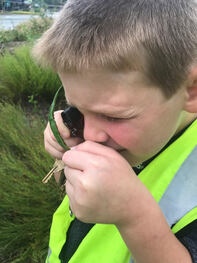
April is Citizen Science Month, an excellent time to discover a new passion. So give it a try, and in all probability, you’ll be hooked.
 
Insects are so cool! Have you ever taken the time just to watch them? It’s incredible how they instinctively know what to do and how to do it. They’re so much more than just a bunch of bugs flying or crawling around, spreading pollen, and sipping nectar. Pollinators are some of the hardest working creatures on this planet. These lovely bees, butterflies, beetles, moths, bats, hummingbirds, ants, etc., work tirelessly without expecting anything in return, except for a pesticide-free habitat to call home.

Some have specialized jobs to do. For example, Bumblebees and other native bees use a technique that honeybees and other insects could never begin to master. Vibrations from the bees’ unique style of Buzz Pollination bounce pollen from the hard to reach anthers of tomatoes, eggplants, kiwis, and blueberries onto their fuzzy bodies to spread onto neighboring plants. So, smile at that curious bumblebee hovering in front of your nose instead of chasing him away.

A number of insects and their larvae carefully patrol their turf, hunting down unwanted pests and dispatching them to the great beyond, while others become the food that keeps the cycle going.

Through observation, researchers have discovered a lot about the natural world, but so many mysteries remain unsolved. Lucky for us, anyone is welcome to join this quest for knowledge through citizen science. There’s no need for college degrees to participate. For the most part, it’s free of charge, and there’s a vast variety of projects to choose from – something is bound to grab your interest!

Have you ever wished to do something worthwhile to benefit humanity and the environment? You can, and the Great Sunflower Project is the perfect place for any novice citizen scientist to begin. The materials you’ll need and the steps to prepare are outlined and explained before you launch into any tasks.

The work is straightforward. All you have to do is watch a plant, record the pollinators, and report your findings online. It’s easy, yet very rewarding when you think of the significant role you play in identifying where pollinators are declining.

From there, the sky’s the limit.
  • Volunteers are needed to solve the mystery of where wild, migratory western monarchs hide during February, March, and April. The Western Monarch Mystery Challenge is a way for Californians to conserve and restore the monarch migration in the West. 
  • You and the kids can take a Cicada Safari, where you go in search of cicadas, photograph them with your phone, and submit the data for verification.
  • Remember the carefree times when you chased fireflies around the backyard on summer evenings? You can relive that memory and combine it with scientific research by spending 15 minutes per night counting the male/female fireflies in your yard. Firefly Watch is another fun project for the family to do together.
  • ​Also concerning fireflies, the Xerces Society is searching for volunteers for their Firefly Atlas. The U.S. and Canada have at least 173 species of lightening bugs. One-third of which may be imperiled and half are data-deficient. Some species live in specialized areas, others are threatened by habitat loss, pollution, climate change or pesticide use. This project will chart where they are found and help in recovering the dwindling populations.
  • Another Xerces Society citizen science project is the Bumble Bee Atlas. This task gathers data to track and conserve bumble bees. Widespread participation is needed to obtain the large amount of information they need to better understand bumble bees and implement effective bumble bee conservation.
As a citizen scientist, you can volunteer your time to participate in one of these vital projects or something else that captures your attention. On SciStarter or iNaturalist, there are hundreds if not thousands of citizen science projects ranging from archaeology and astronomy to insects and pollinators to physics and social sciences. You’re bound to find something that piques your interest.

In citizen science, ordinary people contribute to scientific research to better understand and solve environmental and social issues by researching, collecting, and analyzing data, interpreting results, making discoveries, and developing technologies and applications.

The term citizen science only dates back to the 1990s. Still, the role played by residents in recording scientific data can be traced to ancient times when the early Egyptians kept careful records of nearly everything, including the annual flooding of the Nile River and the resulting variations in harvests. Likewise, Chinese farmers have kept track of the destructive migratory locusts for the past 2000 years and will continue as long as necessary.

So the concept isn’t new, but the scale and worldwide impact of the scientific research has reached phenomenal proportions. Having a diverse group of participants conducting research in differing regions and conditions makes the results more representative of the whole picture. Plus, having many people working on the project concurrently shortens the time needed to complete the study. And it’s not only the scientific community that benefits from the collaboration. Data suggests that participating in scientific research helps improve literacy and understanding in both adults and children. It helps develop critical thinking skills applied to daily activities and broadens interests in new subjects people would have never considered investigating before.

The best part is that it’s a fantastic way to spend time with your friends or family doing something you can all enjoy and learn something new at the same time.
​
Go for it!

0 Comments

    Greta Burroughs

    I am passionate about cleaning up our environment and restoring the habitats/ecosystems necessary for pollinators and wildlife to flourish.
    ​
    Yet, Pollinator Conservation and Environmental Restoration involve more than just planting trees, flowers, and shrubs. In order to regain the balance Mother Nature intended, we need to also counter pollution, global warming, overuse of pesticides, and destruction of ecosystems.

    ​By publishing articles, essays, and resources on this blog, I hope to Educate, Encourage, and Empower others to find a niche where they can make a difference in this world.

    Archives

    April 2024
    March 2024
    February 2024
    January 2024
    December 2023
    November 2023
    October 2023
    September 2023
    August 2023
    July 2023
    June 2023
    May 2023
    April 2023
    March 2023
    February 2023
    January 2023

    RSS Feed

    Picture
    Picture
I will read forever because it lets me visit in my mind the worlds that I will never be able to see; it helps me put away the stresses of the day and relax into the rhythm of the story before me; it lets me bring to the surface and experience without regrets those feelings I hide away; it lets me re-experience the thrill of first love through someone else's eyes; it keeps my mind juiced so that it will never desert me; it is always there for me even when there's no one else. I will read forever no matter whether it is print or digital because the words will always call to me. ~ A Sassy Scribbler