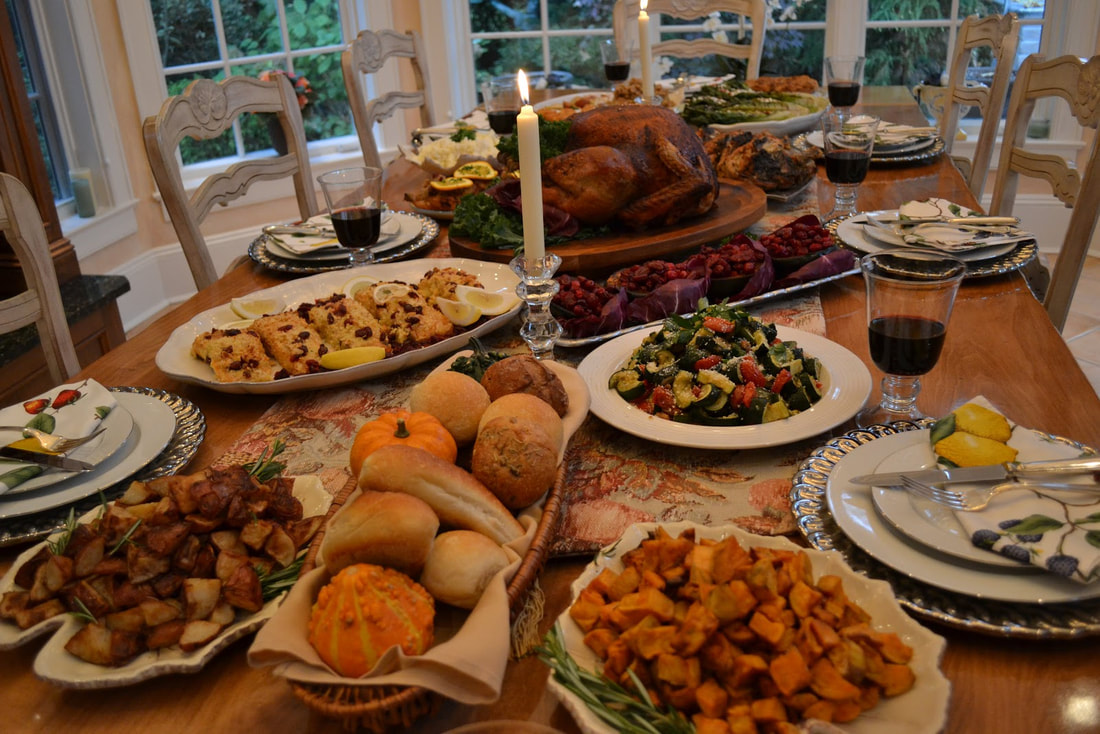
Thanksgiving just wouldn’t be Thanksgiving without food. The holiday originated as a time to be grateful for a bountiful harvest, so we carry on the tradition by preparing and eating a large meal. We say we’re thankful for the feast spread out in front of us, but does anyone actually take the time to thank the pollinators who made it all possible?
Before you dig into the food heaped on your plate, think about what it would look like if the bees, ants, flies, butterflies and moths, birds and bats, beetles, and other pollinators disappeared. Our feast would consist of turkey and some rice or noodles. You may indulge in some corn and potatoes since they are both wind-pollinated and cross-pollinated by insects. However, there’d be no gravy (made with milk) or butter since dairy products would be in short supply without bee-pollinated clover and alfalfa to feed the cows who produce the milk. Plus, our meager meal would be awfully bland without pepper.
As you take a generous scoop of cranberry sauce, think of the bees that visited the bogs where the cranberries grew. Generally, native bees busily hunt down the plant’s flowering blossoms. But in southeastern Massachusetts, the lower numbers of local bees force growers to bring in migratory honeybees and/or bumblebees to do the work. Honeybees are not all that efficient since they aren’t well adapted for the damp conditions. Yet, on the other hand, bumblebees have no problem navigating around the wet bogs and willingly work from early morning until late in the day.
During the feast, you have to serve a good selection of veggies to complement the turkey and stuffing/dressing. More than three-quarters of the world’s food crops rely partly on pollination by insects and other animals. So the celery, onions, herbs, and spices in the stuffing, along with the beans, squash, broccoli, sweet potatoes, and other goodies on the side, are all thanks to the hard-working pollinators.
While you’re chowing down on the main course, don’t forget to save a little room for dessert. Say thanks to the native bees and other insects who pollinated the pumpkins, apples, cherries, blackberries, blueberries, pecans, and other nuts and berries for our favorite pies. Along with the primary ingredients, the spices, vanilla, and other flavorings wouldn’t be available if not for the bugs and critters investigating the blossoms emitting the irresistible aromas or brushing by and collecting pollen to spread to neighboring plants.
You’ll need some wine, apple cider, or tea to wash down all the food. Coffee with dessert, anyone? All these beverages are brought to you by the creeping, crawling, buzzing, and flittering creatures native to the region where the bushes and trees are grown.
How about a bit of chocolate while relaxing after dinner in anticipation of the next holiday coming up? Chocolate comes from the seeds of the cacao tree. To produce those seeds, the trees rely on the pollination services of more than a dozen species of biting flies called midges.
Think about it. Even if you eat pepperoni pizza instead of the traditional fare, Thanksgiving would be extremely boring if not for the pollinators. So, while you’re chowing down, don’t forget to say a word of thanks to the creatures that make the day possible.
Before you dig into the food heaped on your plate, think about what it would look like if the bees, ants, flies, butterflies and moths, birds and bats, beetles, and other pollinators disappeared. Our feast would consist of turkey and some rice or noodles. You may indulge in some corn and potatoes since they are both wind-pollinated and cross-pollinated by insects. However, there’d be no gravy (made with milk) or butter since dairy products would be in short supply without bee-pollinated clover and alfalfa to feed the cows who produce the milk. Plus, our meager meal would be awfully bland without pepper.
As you take a generous scoop of cranberry sauce, think of the bees that visited the bogs where the cranberries grew. Generally, native bees busily hunt down the plant’s flowering blossoms. But in southeastern Massachusetts, the lower numbers of local bees force growers to bring in migratory honeybees and/or bumblebees to do the work. Honeybees are not all that efficient since they aren’t well adapted for the damp conditions. Yet, on the other hand, bumblebees have no problem navigating around the wet bogs and willingly work from early morning until late in the day.
During the feast, you have to serve a good selection of veggies to complement the turkey and stuffing/dressing. More than three-quarters of the world’s food crops rely partly on pollination by insects and other animals. So the celery, onions, herbs, and spices in the stuffing, along with the beans, squash, broccoli, sweet potatoes, and other goodies on the side, are all thanks to the hard-working pollinators.
While you’re chowing down on the main course, don’t forget to save a little room for dessert. Say thanks to the native bees and other insects who pollinated the pumpkins, apples, cherries, blackberries, blueberries, pecans, and other nuts and berries for our favorite pies. Along with the primary ingredients, the spices, vanilla, and other flavorings wouldn’t be available if not for the bugs and critters investigating the blossoms emitting the irresistible aromas or brushing by and collecting pollen to spread to neighboring plants.
You’ll need some wine, apple cider, or tea to wash down all the food. Coffee with dessert, anyone? All these beverages are brought to you by the creeping, crawling, buzzing, and flittering creatures native to the region where the bushes and trees are grown.
How about a bit of chocolate while relaxing after dinner in anticipation of the next holiday coming up? Chocolate comes from the seeds of the cacao tree. To produce those seeds, the trees rely on the pollination services of more than a dozen species of biting flies called midges.
Think about it. Even if you eat pepperoni pizza instead of the traditional fare, Thanksgiving would be extremely boring if not for the pollinators. So, while you’re chowing down, don’t forget to say a word of thanks to the creatures that make the day possible.
 RSS Feed